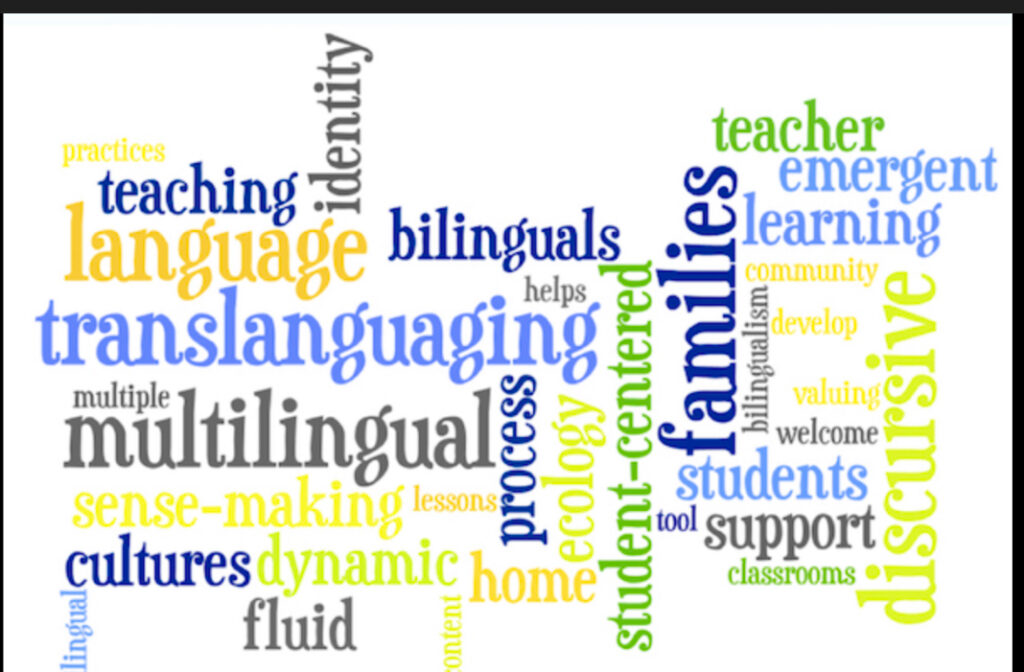
Designing with Translanguaging in Mind
As teachers, we are designers; we create lesson plans that are catered to support and help our students learn to the best of their abilities. With that being said, when designing our lesson plans, we must remember that our students come from different backgrounds and cultures. They may speak different languages, and English may not be their first one. They may even be at the beginning stages of learning English. Therefore, these students would be considered emergent bilinguals.
These students may feel shy, lost, or out of place due to having to adapt to a new language. But it is our job as teachers to create our classrooms to be safe and comfortable learning environments. One way of doing this is by implementing translanguaging in our classroom environment. Translanguaging is the breaking down of elitist rules that are put in place to erase or force people to assimilate to one language. It highlights that students have different language repertoires that allow them to communicate and code switch when needed.
As designers, we must allow our students to use their different language repertoires. For example, let’s say a student is doing a journal entry before class starts allowing the student to freely write, whether that be in their home language or the language they are learning. The student should choose which one fits best, while also being offered that choice. Another example can include when a student wants to share out in a whole-class discussion; they can be allowed to answer the question in their home language or in whatever way is comfortable to them within their linguistic repertoire.
These examples are forms of translanguaging because they allow students to not have to assimilate or hide parts of their identity, while also allowing them to communicate comfortably as they see fit. This is an important strategy to use in the classroom because it allows students to feel comfortable while also not forcing them to assimilate to rules that make them lose their sense of self. We want to invite all languages and language repertoires, because they should all be welcomed into the classroom.